
 Menu
MenuAgriculture
Suspended Flooring & Axle Loading: Why It Matters When Driving Over Concrete Slats
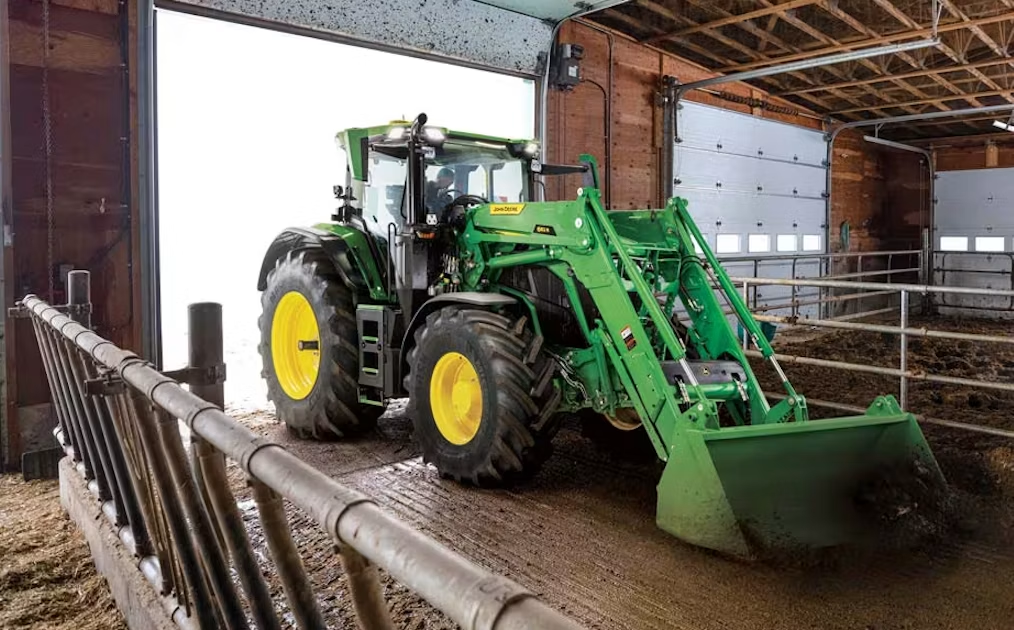
When operating tractors, telehandlers, feed wagons, trailers or other agricultural machinery over suspended concrete flooring, understanding axle loading is essential. The weight of a vehicle is not the only factor that determines whether a suspended flooring system is being operated within its designed capacity. The load applied through each individual axle and wheel position is particularly important.
At Moore Concrete, our Suspended Flooring products are designed by Chartered Structural Engineers in accordance with the relevant Eurocodes and manufactured in compliance with BS EN 12737:2004+A1:2007 – Precast Concrete Products – Floor Slats for Livestock.
However, it is important that the flooring is operated within its specified design parameters. Understanding axle loading can help farmers and machinery operators make informed decisions about which vehicles and equipment are suitable for driving over concrete slats.
What Is Axle Loading?
Axle loading is the weight carried by an individual axle of a vehicle or piece of equipment.
For example, a tractor, telehandler, trailer or feed wagon may have multiple axles, with each axle carrying a different proportion of the overall vehicle weight.
When assessing whether a vehicle is suitable for driving over suspended flooring, it is therefore the individual axle load, rather than the overall vehicle weight, that should be compared with the design capacity of the flooring.
The design axle load applicable to your Moore Concrete Suspended Flooring products will be detailed on the Order Acknowledgement issued following receipt of your order. If you are unsure of the design axle load for your flooring, please contact Moore Concrete before operating vehicles or equipment over the slats.
Why Can’t You Simply Divide the Vehicle Weight by the Number of Axles?
It may seem logical to take the total weight of a vehicle and divide it by the number of axles. However, this does not provide an accurate indication of the load being applied to each axle.
Vehicle weight is not necessarily distributed evenly. The amount of weight carried by each axle can be affected by numerous factors, including:
- The location of the engine
- Vehicle configuration
- Ballast
- The weight and position of the load
- Drawbar loading
- Trailer and implement design
- Suspension configuration
- The position of the wheels relative to the concrete flooring
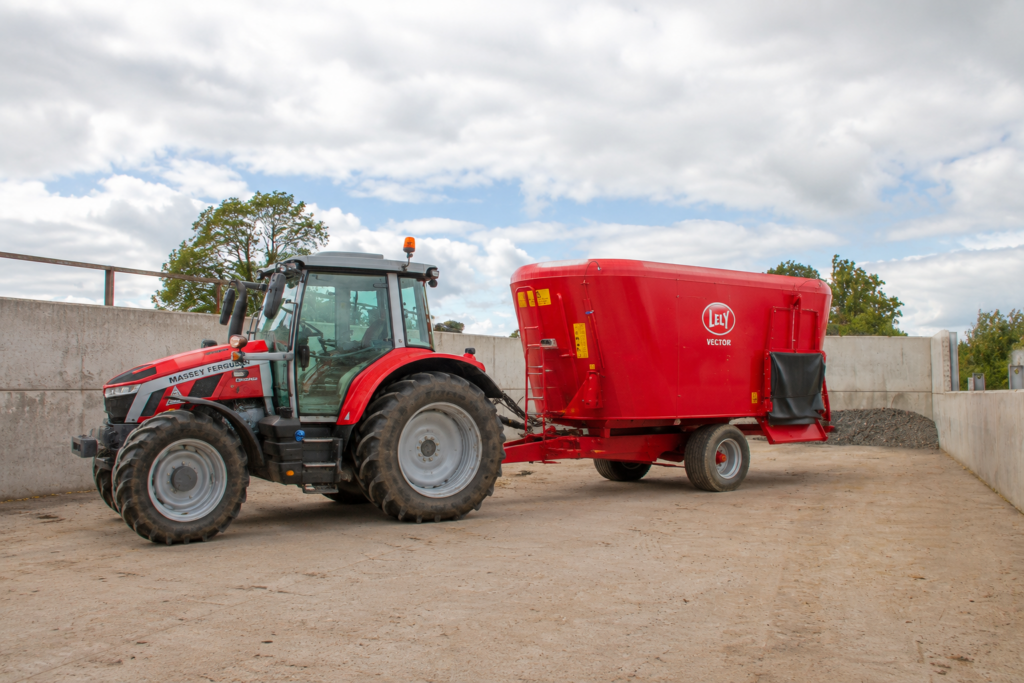
For example, when a loaded trailer or feed wagon is being towed, a proportion of the load may be transferred through the drawbar onto the towing vehicle, while the remainder is carried by the trailer axle or axles.
This means that simply knowing the gross weight of a vehicle or piece of machinery does not provide enough information to determine the load being applied to the suspended flooring.
Does Loading a Trailer Increase Axle Loading?
Yes, as additional material is added to a trailer, feed wagon or other piece of agricultural equipment, its overall weight increases. This additional weight will also affect the loads being transferred through the vehicle’s axles and wheels.
The exact distribution will depend on the design and configuration of the equipment and where the load is positioned.
This is particularly important as modern agricultural machinery continues to become larger and heavier. Equipment such as high-capacity feed wagons, telehandlers, tractors and trailers can place significant loads onto concrete flooring, making it increasingly important to understand the design limitations of the flooring system before operating machinery over it.
Can a Single Overload Damage a Concrete Slat?
Yes. A single overload can compromise the structural integrity of a concrete slat, even where there is no immediately visible sign of damage.
Concrete products are engineered to perform under their specified design conditions. Operating equipment above the stated design axle load can place stresses on the product that it was not designed to withstand.
Importantly, damage caused by an overload may not always be immediately obvious. A unit may continue to appear serviceable, while the effects of excessive loading may only become evident later.
For this reason, preventing overloading is far better than relying on visible damage as an indication that a problem has occurred.
Concrete Strength and the 28-Day Period
Concrete continues to gain strength after casting and achieves its full design strength after 28 days.
The date of manufacture is shown on the product label affixed to each unit. If the product label is missing or illegible, please contact Moore Concrete for advice before handling the product or operating equipment over the flooring.
Allowing products to achieve their required strength is an important part of ensuring they perform as intended.
What Factors Influence Axle Loading?
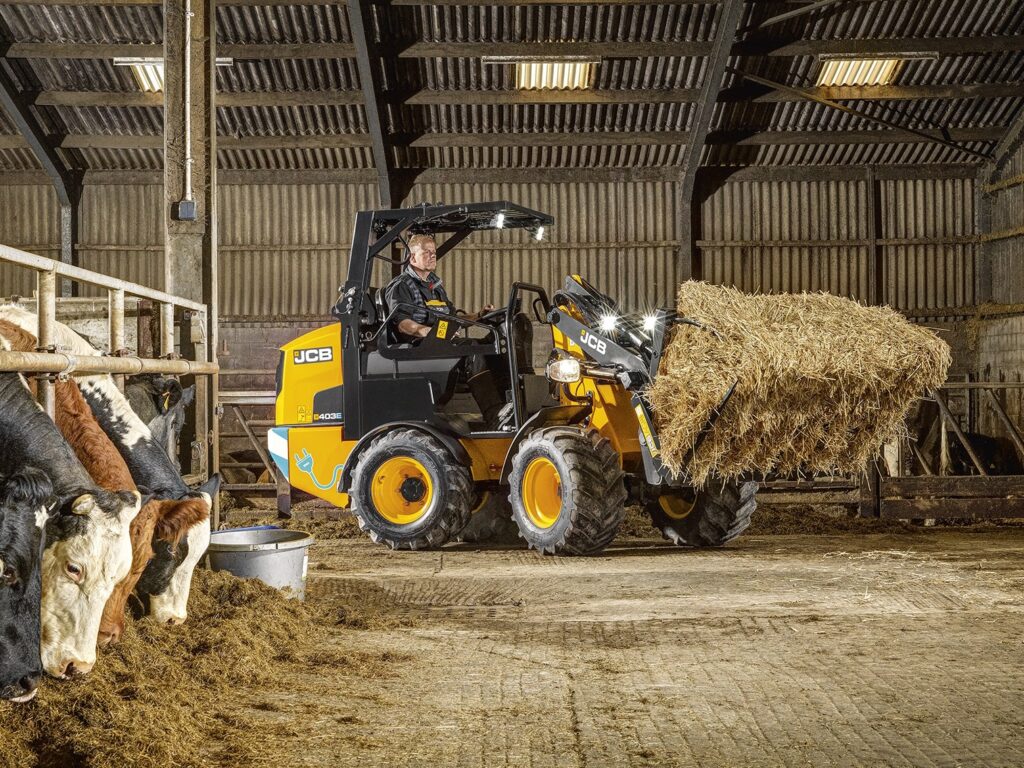
There are several factors that can affect the load being applied to suspended flooring. These include:
- Vehicle make and model
- Vehicle configuration, such as 2WD, 4WD or tandem axle
- Unladen vehicle weight
- Trailer or implement weight
- Weight of the load being carried
- Drawbar load transferred to the towing vehicle
- Distribution of the load within the trailer or implement
- Tyre size and tyre pressure
- Suspension design
- Turning, braking and acceleration
- Wheel position relative to the concrete flooring
These factors demonstrate why it is important to look beyond the overall weight of a vehicle when assessing whether it is suitable for use over suspended flooring.
Take Care When Driving Over Suspended Flooring
Driving over suspended concrete flooring is a routine part of many agricultural operations. Tractors may cross slatted areas when moving feed, telehandlers may be used around livestock buildings, and feed wagons or trailers may need to pass over flooring as part of everyday farm work.
However, routine use should not mean overlooking axle loading.
Before operating machinery over suspended flooring, operators should understand the design axle load of the flooring and consider the vehicle or equipment being used, including its unladen weight, load and configuration.
Moore Concrete Suspended Flooring products are designed for specific loading conditions, and the applicable design axle load for the products supplied will be detailed on the Order Acknowledgement.
Taking the time to understand axle loading can help protect your flooring investment.
Built for Agriculture. Designed for the Load.
At Moore Concrete, our Suspended Flooring products are engineered with the demands of modern agriculture in mind. By understanding the relationship between vehicle weight, axle loading and flooring capacity, farmers and machinery operators can make better-informed decisions about the equipment used over concrete slats.
If you are unsure about the design axle load of your Moore Concrete Suspended Flooring, contact our team for advice before operating vehicles or machinery over the products.